Lifetime TAVI Planning
The Neoskirt: A Key to Planning Future TAV-in-TAV
Explore how displaced valve leaflets can shape coronary access and the feasibility of a second transcatheter valve procedure.
Looking Beyond the First Valve
Why Future Interventions Matter Now
As TAVI expands to younger and lower-risk patients, more people may live long enough to require treatment when their first transcatheter valve deteriorates. The initial choice of valve, its placement, and its relationship to the coronary arteries can influence the options available years later. Considering a potential TAV-in-TAV procedure from the outset helps clinicians evaluate not only immediate procedural success but also the feasibility and risks of a patient’s longer-term treatment pathway. Decisions should remain grounded in individual anatomy, clinical assessment, and current guidelines.
Anatomy of a Repeat Procedure
How the Neoskirt Shapes TAV-in-TAV Planning
Leaflet Displacement
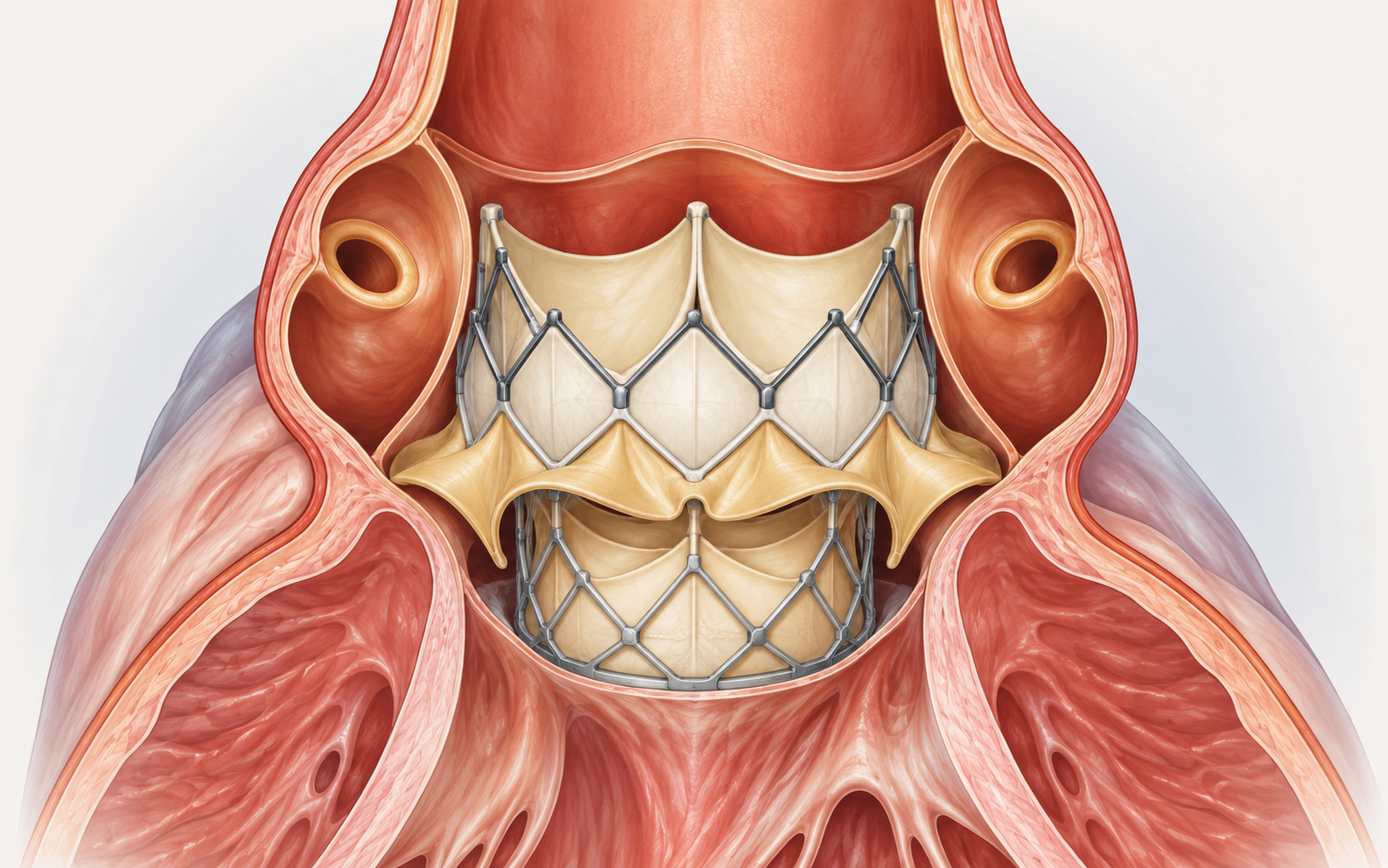
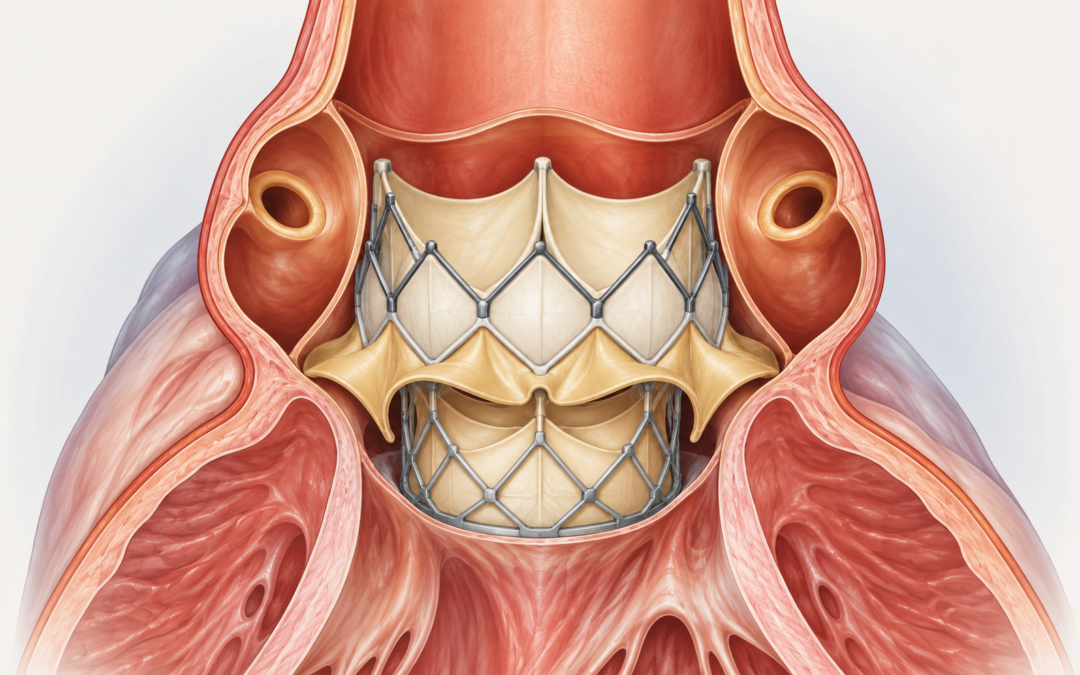
During TAV-in-TAV, the new valve can push the original valve’s leaflets outward against the first valve frame.
Neoskirt Formation
Those displaced leaflets create a neoskirt, a barrier whose height and position depend on the existing valve and its implantation.
Coronary Ostia
A neoskirt extending above the coronary openings may restrict blood flow or complicate future coronary access.
Sinotubular Junction
If the neoskirt reaches the sinotubular junction, it may isolate the sinus and increase the risk of sinus sequestration.
Anatomical Clearance
Distances between the implanted valve, coronary arteries, and sinotubular junction help assess whether blood can circulate around the neoskirt.
Valve Design
Frame geometry and leaflet configuration affect where displaced leaflets settle and how high the neoskirt may rise.
Implantation Depth
The depth of the first valve can change the neoskirt’s position relative to the coronary openings and sinotubular junction.
Commissural Alignment
Alignment of valve commissures can affect coronary access and should be considered when evaluating options for a repeat procedure.
Anatomy That Matters in TAV-in-TAV
Mehdi Eskandari discusses how the neoskirt, coronary ostia, and sinotubular junction relate to planning a second transcatheter valve procedure.
Key Considerations for Future TAV-in-TAV
Neoskirt Height
Estimate where displaced leaflets may reach after a second valve is implanted.
Coronary Ostia Position
Assess whether the projected neoskirt could extend above the coronary openings.
Sinotubular Junction Height
Compare the neoskirt’s anticipated upper edge with the sinotubular junction.
Valve-to-Coronary Distance
Measure the space between the implanted valve and each coronary artery.
Valve-to-STJ Distance
Evaluate the space available between the valve frame and sinotubular junction.
Valve Design
Consider how leaflet length and frame configuration shape the resulting neoskirt.
Implantation Depth
Account for how the initial valve’s position affects future leaflet displacement.
Commissural Alignment
Review commissural orientation when assessing coronary access during a repeat intervention.
Assessing the Neoskirt Before a Future Intervention
Step 1
Project the Neoskirt
Use the existing valve’s design and position to estimate how its leaflets may be displaced by a second valve.
Step 2
Compare Anatomical Landmarks
Relate the projected neoskirt to the coronary ostia and sinotubular junction, including the available distances.
Step 3
Inform Procedural Planning
Consider whether these relationships raise concerns about coronary obstruction or sinus sequestration in a potential TAV-in-TAV procedure.
“The first TAVI should be planned with the next intervention in mind: valve choice and implantation strategy today can shape the options available throughout a patient’s lifetime.”

Mehdi Eskandari
 Contributor to the discussion on neoskirt anatomy and future TAV-in-TAV planning
Use anatomical insights within clinical context
This article is intended for healthcare professionals and educational purposes. It explores how leaflet displacement during TAV-in-TAV can create a neoskirt and why its relationship to the coronary ostia and sinotubular junction matters when evaluating future intervention options.


Assess each patient individually
Neoskirt height, coronary and sinotubular junction distances, valve design, implantation depth, and commissural alignment may all inform procedural planning. Their significance depends on the patient’s anatomy, prior valve, and overall clinical circumstances.
Follow current guidance
This educational discussion does not replace clinical judgment. Individual treatment decisions require a thorough clinical assessment and adherence to current guidelines.
Consider the lifetime pathway
As TAVI is used in younger and lower-risk patients, the potential need for a later intervention deserves attention during the initial procedure. Planning ahead can help clinicians evaluate long-term options without assuming that repeat TAVI will be appropriate for every patient.
Bring future interventions into today’s TAVI plan
When assessing anatomy, selecting a valve, and planning implantation, consider how today’s choices could affect coronary access and the feasibility of TAV-in-TAV later. Carry those considerations into follow-up and long-term management discussions.